List of Taboo Kinks: A Consent-First Guide for Adults
Searching for a list of taboo kinks can feel awkward, especially if you are trying to understand a fantasy without feeling judged by it. The safer starting point is not a dare or a label. It is a calm vocabulary for adult self-reflection, consent, and boundaries. On an anonymous BDSM preference test, people often begin by noticing patterns: control, service, sensation, attention, taboo roleplay, or curiosity that does not fit a simple vanilla/kinky split. This guide explains common taboo kink categories in plain English, shows where the safety lines belong, and offers practical ways to think before you share or explore anything with another adult.

What Makes a Kink Feel Taboo?
A kink is an erotic or relational interest that sits outside someone's idea of conventional sex or intimacy. A fetish is usually a stronger focus on a specific object, material, body part, or scenario. A paraphilia is a clinical word for an atypical arousal pattern, but an atypical interest is not automatically a mental health problem. The important distinction is harm: consent, adult participation, distress, impairment, coercion, and risk all matter.
"Taboo" is a social word, not a safety rating. Something may feel taboo because it involves power, embarrassment, surrender, role reversal, bodily intensity, or a fantasy that would be unacceptable outside a negotiated adult scene. That does not make it good or bad by itself. It does mean the topic deserves more care than a casual suggestion.
Before using any list of taboo kinks as a menu, separate three questions:
- Is everyone involved an adult who can freely consent?
- Is the fantasy legal, negotiated, and reversible?
- Does it support wellbeing, or does it create distress, secrecy, pressure, or risk?
If an interest involves minors, non-consenting people, animals, real coercion, stalking, public exposure to unaware people, or serious injury, it does not belong in consensual kink. If an interest feels unwanted, compulsive, or deeply distressing, consider speaking with a qualified professional who can offer private, nonjudgmental support.

A Consent-First List of Taboo Kinks
This list is educational, not a challenge. You do not need to try something for it to be valid as a fantasy, and you do not need to share every fantasy with a partner. Many adults keep certain kinks in imagination, writing, or private reflection only.
1. Power Exchange and D/s
Dominance and submission, often called D/s, center on consensual control. One person may enjoy leading, directing, protecting, or setting rules; another may enjoy surrendering, serving, or being guided. The taboo often comes from the contrast between equality in ordinary life and chosen hierarchy inside a scene.
Healthy power exchange is specific. Adults agree on roles, limits, safewords, duration, aftercare, and what happens when the scene ends. "Because I said so" only works inside boundaries that were already freely chosen.
2. Bondage and Restraint Fantasy
Bondage can be as symbolic as a silk tie or as technical as rope. The appeal may be stillness, trust, surrender, aesthetics, or the feeling of being held. The safety line is physical risk: circulation, nerves, breathing, panic, and the ability to stop quickly.
Beginners should treat restraint as a skill area, not a prop purchase. Keep release tools nearby, avoid tying around the neck, never leave a restrained person alone, and create a nonverbal stop signal if speech could be limited.
3. Impact, Sensation, and Intensity Play
Impact play includes spanking, paddling, flogging, and similar consensual sensation. Sensation play may involve temperature, texture, pressure, or surprise. These kinks can feel taboo because they blur the emotional line between discomfort and pleasure.
The difference is consent and control. Start low, avoid vulnerable areas, check in often, and stop when the agreed signal appears. People with medical concerns, blood-thinning medication, nerve issues, or trauma triggers should be especially cautious and may want professional guidance before considering higher-risk activities.
4. Praise, Degradation, and Humiliation Scripts
Praise kink centers on affirmation, approval, and being seen as pleasing. Degradation or humiliation kink uses intentionally scripted words, embarrassment, or status play. The taboo is psychological: words can land deeply, even when everyone agreed.
Negotiation needs to include exact language. Some words feel exciting; others feel cruel or identity-shaking. Adults can use a "green words, yellow words, red words" list before any scene. Afterward, reconnect with names, warmth, and ordinary respect so the role does not leak into daily life.
5. Roleplay, Authority Fantasy, and Forbidden Scenarios
Roleplay lets adults create a scene that is separate from real life: strangers, rivals, authority roles, service roles, or other forbidden-feeling scripts. The scene may be arousing because it is clearly pretend. That container is what keeps it safe.
Use explicit framing. Agree on who the characters are, what the scene includes, what is off-limits, and how to exit character. Adult-only age-role fantasy belongs in this category only when every participant is an adult and the scene avoids any involvement of real minors or non-consenting people.
6. Cuckolding, Hotwifing, and Jealousy Play
Some taboo kinks involve jealousy, comparison, being watched, or imagining a partner with someone else. These may stay entirely in fantasy, storytelling, or private talk. If they move toward real people, the ethics become much more complex because everyone affected deserves informed consent and dignity.
Couples should avoid using non-monogamy fantasy to repair a fragile relationship. Discuss privacy, safer sex, emotional aftercare, communication, and whether the fantasy is actually wanted in real life.
7. Exhibitionism and Voyeurism With Consent
Watching and being watched are common fantasy themes, but the consent line is strict. Exhibitionism and voyeurism are only ethical when every person who might see or be seen has knowingly agreed. Unaware bystanders are not props.
Safer adult containers may include private roleplay, consensual photos kept private, or vetted adult spaces with clear rules. Public exposure, secret recording, or spying is not consensual kink.
8. Object, Clothing, and Body-Part Fetishes
Feet, shoes, leather, latex, scent, uniforms, lingerie, and textures can become strong erotic symbols. These interests may feel embarrassing because they focus attention on something specific, but they are not automatically harmful when kept consensual and respectful.
The key is not treating another person like an object without agreement. Ask for permission, avoid entitlement, and remember that a partner may enjoy the attention sometimes and decline it at other times.
9. Pet Play and Caretaking Dynamics
Pet play involves adults taking on animal-inspired roles such as puppy, kitten, pony, handler, owner, or caretaker. For some people it is playful; for others it is about service, obedience, affection, or dropping ordinary responsibilities for a while.
This kink should be framed as adult roleplay. Agree on names, gear, public/private boundaries, and how to return to ordinary interaction afterward. It can be nonsexual, sexual, or somewhere in between, depending entirely on the adults involved.
10. Orgasm Control, Chastity, and Denial
Orgasm control involves permission, delay, teasing, denial, or structured anticipation. Chastity may be symbolic or device-based. The taboo is the surrender of a very personal form of control.
Time limits matter. Agree on duration, hygiene, physical comfort, emotional check-ins, and a stop plan. No one should be pressured to endure discomfort to prove devotion.
11. Body-Fluid and Messy Play Taboos
Some adults are curious about urine, sweat, saliva, food, or other body-related taboos. These interests often involve intimacy, vulnerability, disgust reversal, or the thrill of doing something socially forbidden.
The safety frame is hygiene, health, surface preparation, consent, and immediate cleanup. Avoid activities with higher infection risk unless everyone has reliable education and explicit boundaries. It is also completely fine to keep this category as fantasy only.
12. Edge Play, Breath Play, and High-Risk Curiosity
Edge play describes activities that carry higher physical or psychological risk. Breath play and choking deserve special caution because oxygen restriction can cause serious injury or death, even when people think they are being careful. This guide does not provide technique for high-risk acts.
If the appeal is intensity, control, or being overpowered, consider lower-risk alternatives: verbal roleplay, firm but non-restrictive positioning, eye contact, countdowns, or negotiated restraint that does not affect breathing. Risk-aware curiosity starts with knowing what not to do.

How to Sort Your Own Kink List Without Shame
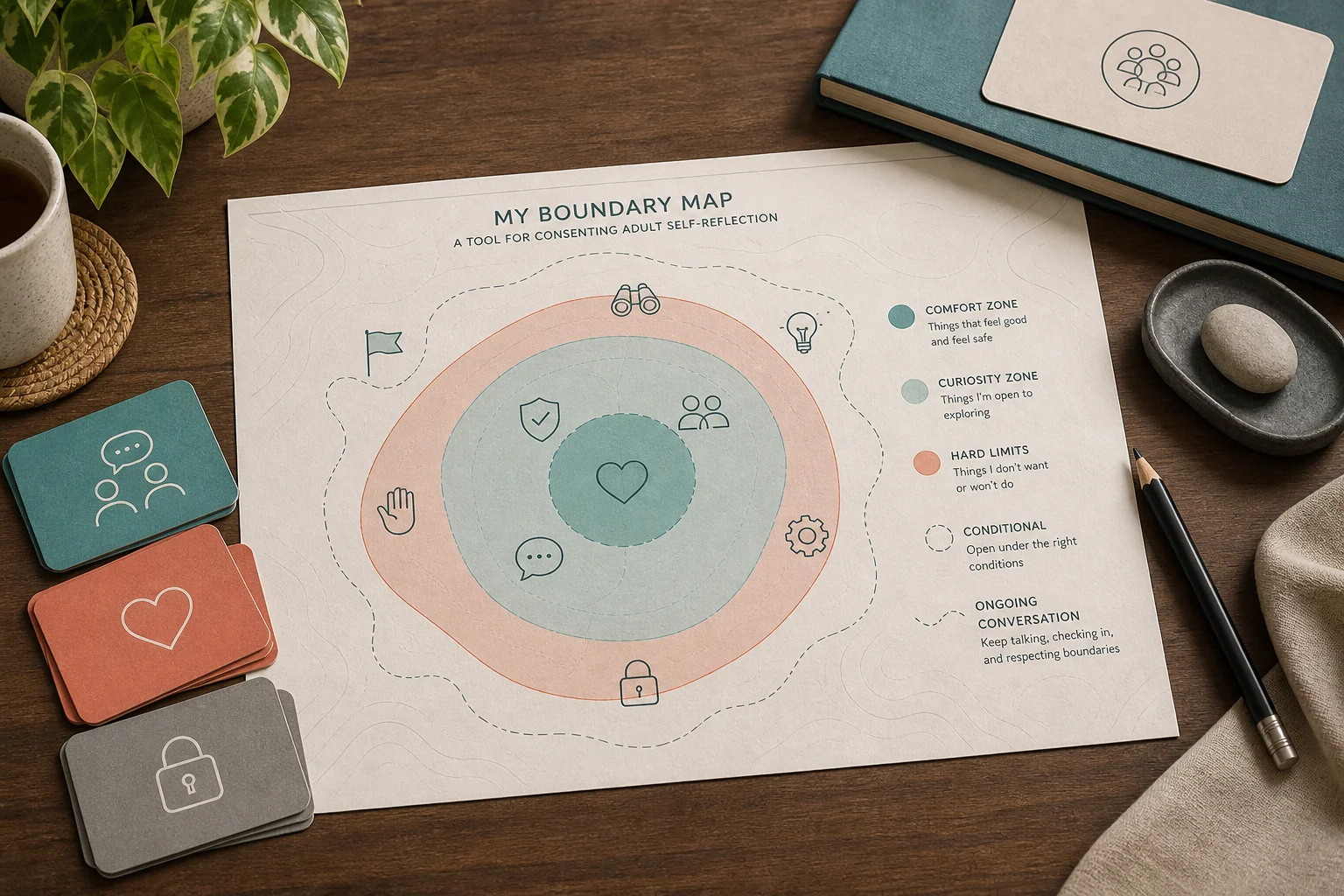
A private list can help you understand patterns before involving anyone else. On a free kink self-reflection tool, the useful outcome is not a permanent identity. It is language: what draws your attention, what feels neutral, what feels exciting only in fantasy, and what belongs in the hard-no column.
Try sorting interests into five buckets:
- Yes: something you would like to discuss or explore.
- Maybe: something that depends on partner, timing, context, or limits.
- Fantasy only: something arousing in thought but not desired in real life.
- No: something you do not want.
- Learn first: something that requires education before any decision.
Patterns matter more than shock value. If many interests involve surrender, you may be drawn to trust and release. If many involve giving direction, you may like responsibility, structure, or leadership. If many involve taboo language, you may be exploring vulnerability, embarrassment, or permission.
How to Talk About Taboo Kinks With a Partner
The best kink conversations happen away from sexual pressure. Choose a neutral moment: a walk, a relaxed evening, or a planned check-in. Start with curiosity rather than confession. For example: "I have been learning about a fantasy category and I want to understand what it means for me. Would you be open to talking about it sometime?"
Use four rules:
- Speak in "I" statements.
- Ask before sharing intense details.
- Treat "no" as complete information.
- Discuss the emotional meaning, not only the activity.
If a partner reacts with surprise, slow down. Surprise is not automatically rejection. Give them time, offer resources, and avoid bargaining. Consent cannot grow in pressure.
For couples, a shared yes/no/maybe list works better than one person pitching a fantasy. Fill it out separately, compare overlaps first, and save mismatches for respectful conversation. A "maybe" should never be treated as a secret yes.
Safety, Consent, and Aftercare Basics
Every taboo kink needs a safety framework. Many BDSM communities use ideas such as SSC, which means safe, sane, and consensual, or RACK, which means risk-aware consensual kink. The shared point is simple: adults should understand what they are agreeing to, have a way to stop, and care for each other afterward.
Before any scene, discuss:
- Roles and expectations.
- Hard limits and soft limits.
- Safewords or stop signals.
- Physical risks and emotional triggers.
- Privacy, photos, and digital boundaries.
- Aftercare needs.
Aftercare can include water, food, warmth, quiet, reassurance, cuddling, space, a shower, or a next-day check-in. Dominant, submissive, switch, top, bottom, and partner roles can all need aftercare. A scene is not truly over just because the activity stops.

Turning a List of Taboo Kinks Into Self-Knowledge
A list of taboo kinks is most useful when it helps you become more honest and more careful, not more reckless. You might discover that you are curious about BDSM roles, that certain fetishes are simply part of your fantasy life, or that some categories are clear no-go areas. All of those outcomes are valid.
If you want a structured next step, explore your BDSM preferences privately and use the results as conversation material, not a final label. Revisit your list over time. Interests can change with trust, experience, stress, relationships, and self-understanding.
The healthiest approach is both open-minded and grounded: no shame for fantasy, no pressure to act, no kink without consent, and no ignoring risk because something sounds exciting.
FAQ
What is a taboo kink?
A taboo kink is an adult sexual or relational interest that feels socially forbidden, embarrassing, or difficult to discuss. The word taboo does not automatically mean unsafe. Safety depends on consent, legality, risk, emotional impact, and whether all involved adults can freely agree.
Are taboo kinks normal?
Many adults have fantasies or interests that feel unusual to them. An uncommon interest is not automatically a problem. It becomes concerning when it involves non-consent, illegal behavior, serious risk, distress, impairment, or pressure toward someone who does not want it.
What is the difference between a kink and a fetish?
A kink is a broad nontraditional interest, such as power exchange or sensation play. A fetish is usually a stronger focus on a specific object, material, body part, or scenario. People often use the words casually, so context matters.
Should I try everything on a list of taboo kinks?
No. A list is for vocabulary and reflection, not a checklist you must complete. Some interests can stay fantasy-only. Others may require education, negotiation, or a clear decision that they are not right for you.
How do I bring up a taboo kink without scaring my partner?
Choose a calm moment outside sex, ask permission to discuss something personal, and use "I" statements. Share the emotional meaning first, then ask how they feel. Accept no, maybe, and pause as valid answers.
Are BDSM tests a substitute for professional advice?
No. A BDSM test or kink checklist can support private self-reflection, but it is not medical care, therapy, or a professional assessment. If your interests feel distressing, compulsive, unsafe, or connected to trauma, consider talking with a qualified professional.
What is the safest first step for exploring taboo kinks?
Start with private reflection, education, and a yes/no/maybe list. If another person is involved, talk before any scene, agree on limits and stop signals, and plan aftercare. Moving slowly is a strength, not a failure.