Comprehensive Kink List: The A to Z Guide of Desires
Navigating the vast landscape of human sexuality can leave anyone feeling overwhelmed, but creating a structured kink list is one of the most effective ways to articulate your desires. You might sense that your preferences lie outside the "vanilla" norm, yet feel uncertain about how to express them to a partner. This guide is not just about ticking boxes on a checklist; it is about finding the vocabulary for your inner self. Whether you feel relieved to finally find a name for your feelings or confused by the terminology, you are in the right place.

Maybe I’m just overthinking this. Everyone else seems to know exactly what they want. I don’t want to be labeled or judged; I just want to understand why certain things resonate with me while others don’t.
This guide moves beyond a simple glossary. It provides a structured approach to understanding safety, categorizing desires, and navigating conversations with partners. If you are ready to gain clarity, you can explore your profile using our BDSM personality assessment to bridge the gap between curiosity and understanding.
The Core Safety Frameworks (SSC, RACK & Limits)
Before diving into a comprehensive kink list, it is vital to establish the ground rules that make exploration safe. Without these frameworks, a list of desires is just a risky menu. Understanding safety protocols transforms anxiety into confidence and ensures that all parties remain protected.
SSC vs RACK: Choosing Your Safety Model
The two pillars of community safety are SSC (Safe, Sane, Consensual) and RACK (Risk-Aware Consensual Kink). SSC emphasizes that all play should be physically and emotionally safe, prioritizing the prevention of harm above all else. RACK, often preferred by experienced practitioners, acknowledges that some play carries inherent risks but emphasizes informed consent and rigorous risk management. Choosing a model helps you define your hard limits list effectively and aligns your risk tolerance with your partner's.
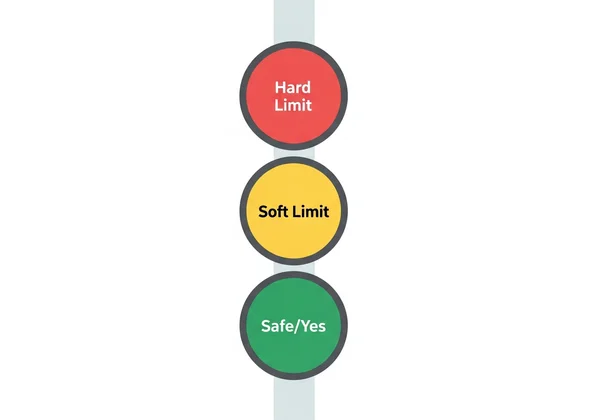
The Hard Limit: Non-Negotiable Boundaries
A hard limit is a firm "red light." It represents activities that are absolutely off the table, regardless of the partner, mood, or context. These boundaries often protect your core sense of safety, physical health, or trauma triggers. Respecting a hard limit is the ultimate sign of trust in a dynamic; violating one is a serious breach of consent.
The Soft Limit: Conditional Approaches
Unlike a hard stop, a soft limit is a "yellow light" or a "maybe." These are activities you might be open to under specific conditions, such as having a high level of trust with a partner, using a specific safe word, or trying a milder version of the act. This nuance is crucial when filling out a yes no maybe list, as it allows for growth without pressure.
The Role of Aftercare & Safewords
Safety does not end when the scene does. Aftercare involves the emotional and physical check-in required to return to a baseline state, helping process the intensity of the experience. Similarly, safe words act as an emergency brake, ensuring communication remains clear even during intense roleplay where non-verbal cues might be missed.
6 Essential Kink Categories (Psychology-First Approach)
A standard bdsm kink list can often look like a chaotic alphabet soup of terminology. To make it digestible, we categorize desires by their psychological drivers. This helps you understand why you like something, not just what it is.
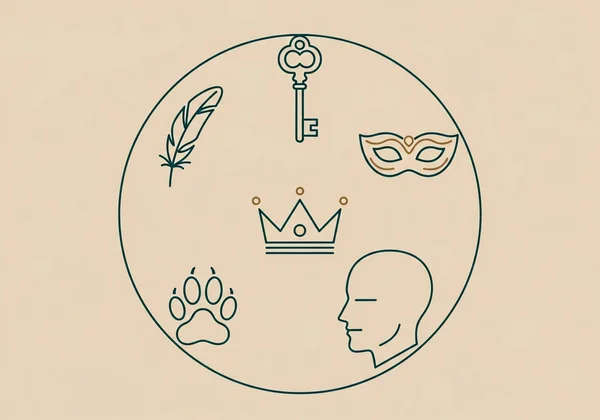
Sensation & Sensory Play
This category focuses on intense physical input. It is not just about impact or temperature; it is about altering how the brain processes reality. By overwhelming or depriving the senses, practitioners often enter a meditative state known as "subspace."
- Examples: Temperature play (ice/wax), spanking, sensory deprivation (blindfolds/hoods), electro-play.
- The Drive: Heightened awareness and being fully "in the moment."
Power Exchange Dynamics (D/s)
Power exchange is the conscious, consensual transfer of control. It ranges from structured authority to gentle guidance. This dynamic relies heavily on trust, as the submissive partner grants power to the dominant partner.
- Examples: Dominance, Submission, Service, Discipline, Protocol.
- The Drive: The freedom found in surrendering responsibility or the satisfaction of guiding and caring for another.
Restriction & Bondage
This creates a physical container for emotions. A list of common kinks often puts bondage at the top because it provides a tangible sense of security. The restriction of movement can silence the mind's anxiety, allowing for profound relaxation.
- Examples: Rope bondage (Shibari), handcuffs, confinement, mummification.
- The Drive: The feeling of being held, secure, and unable to worry about the outside world.
Roleplay & Alter Egos
Roleplay allows you to step out of your daily identity and obligations. It is a psychological vacation that permits you to explore different facets of your psyche in a controlled environment.
- Examples: Medical play, Ageplay (Little/Caregiver), Petplay, Teacher/Student.
- The Drive: Escapism and accessing parts of the personality that are usually suppressed by adult responsibilities.
Primal & Predatory Play
This category taps into raw, evolutionary instincts. It strips away social niceties for something more animalistic and intense. It is often non-verbal and focuses on the energy between "hunter" and "prey."
- Examples: Hunting, wrestling, growling, biting, scratching.
- The Drive: Reconnecting with instinct, raw energy, and a primal state of being.
Objectification & Fetishism
This involves attributing sexual focus to specific objects or body parts, or treating a partner as a "thing" for aesthetic pleasure. It de-personalizes the sexual experience to focus intensely on specific stimuli.
- Examples: Leather, Latex, Feet, Human furniture, Statues.
- The Drive: Aesthetic appreciation and the intense, meditative focus on specific visual or tactile stimuli.
Why Static PDF Lists Create "Analysis Paralysis"
You may have searched for a downloadable kink list pdf or a massive spreadsheet, only to feel exhausted looking at it. This is a common phenomenon known as "analysis paralysis," where the sheer volume of choices leads to inaction.
The Problem with Manual Checklists
A generic kink list template often contains hundreds of terms without context or definitions. Staring at 500 rows of acts can feel like taking a final exam rather than exploring pleasure. You might mark "No" simply because you do not understand the term, inadvertently missing out on something you might actually enjoy if it were explained differently.
Dynamic Analysis vs Static Boxes
Static lists are binary; human desire is fluid and contextual. An intelligent system looks for patterns in your answers rather than isolated data points. Instead of just knowing you like "ropes," a dynamic tool understands you value "restriction and security." This approach offers a deeper "Why" behind the "What," giving you actionable insights into your personality.
Privacy Advantages of Online Tools
Printing a physical document creates a significant privacy risk. If you leave a paper bdsm kink list on your desk or in a drawer, it can be found by roommates or family members. Our platform ensures your exploration remains private, digital, and password-protected (if you choose to save it), keeping your intimate details secure.
Ready to skip the spreadsheet headache? Use our interactive kink list maker to identify your core archetypes and preferences in minutes, rather than hours.
How to Create a Kink List for Couples
If you decide to create a kink list for couples to improve your relationship, the process matters as much as the content. Here is how to move from theory to practice effectively, ensuring both partners feel heard and safe.
Step 1: Solo Reflection (The Blind List)
Start by filling out your list alone. Do not look at your partner's answers yet. This prevents "mirroring," where you subconsciously agree to things just to please them or avoid conflict. Be honest with your own desires first to ensure the final result is authentic.
Step 2: Handling Unknown Terms
You will inevitably encounter terms you do not recognize. Do not guess or assume.
- Action: If you do not know it, mark it as "Maybe" or "Discuss."
- Tip: Research the term together later. This turns confusion into a shared learning activity and prevents misunderstandings about what a specific act entails.
Step 3: Compare and Find the Overlap
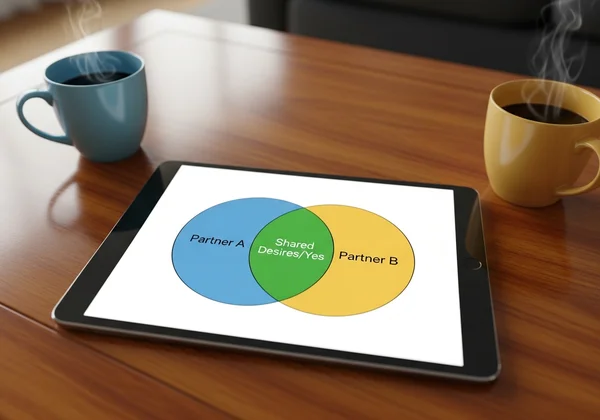
Once both lists are done, compare them side-by-side. Look for the "Green" matches first.
- The Venn Diagram of Desire: Focus heavily on the areas where you both said "Yes." This is your immediate playground and builds positive momentum before tackling difficult topics.
Step 4: Negotiating the Maybes
The "Maybe" column is where the negotiation happens. This area represents potential growth.
- Ask: "Under what conditions would this be a Yes?"
- Clarify: "I am interested in this, but only if we use a safe word and go slowly."
5 Golden Rules for Sharing Your List
Sharing your kink list is a vulnerable act. It requires a safe container to prevent shame, rejection, or misunderstanding.
Choose a Neutral Setting
Never bring up a checklist in the bedroom immediately before or after sex. Emotions are too high, and rejection can feel personal. Choose a neutral time, like a weekend morning over coffee. The pressure should be low, and the environment calm to foster open dialogue.
Adopt a No Judgment Pact
Agree beforehand that no desire is "weird" or "wrong." You are sharing fantasies, not committing to crimes. If something surprises you, react with curiosity rather than disgust. A simple "Tell me more about what appeals to you in that" is better than a shocked expression.
Focus on We Instead of You
Frame the conversation around shared exploration. Instead of saying, "I need you to do this," try, "I think we could have fun exploring this dynamic." This fosters collaboration rather than demand, making your partner feel included rather than used.
Respect the Hard No Immediately
If your partner marks a "Hard Limit," accept it instantly without arguing or bargaining. Pushing a hard limit violates trust and can damage the relationship. Acceptance proves that you value their safety and comfort over your specific fantasy.
Treat the List as a Living Document
Desires change over time. What is a "No" today might be a "Maybe" next year, and vice versa. Revisit your kink list template annually to see how your dynamic has evolved. Regular check-ins keep the relationship fresh and ensure consent remains current.
Start Your Journey of Self-Discovery
Creating a kink list is a brave step toward self-acceptance and better communication. It transforms abstract feelings into concrete language, allowing you to advocate for your needs and respect your boundaries. Remember, this is a journey, not a race. You do not need to try everything on your list tomorrow, nor do you need to define yourself permanently today.
If you are ready to explore your preferences in a safe, judgment-free environment, take our comprehensive BDSM test to reveal your unique profile and start the conversation with confidence.
Frequently Asked Questions
What is the difference between a kink and a fetish?
A fetish is typically defined as a sexual fixation on a non-sexual object or body part that is necessary for sexual gratification. A kink is generally considered an unconventional sexual practice that enhances pleasure but may not be strictly necessary for arousal or completion.
What should we do if our Yes and No columns conflict?
This is normal in most relationships. Focus on the overlapping "Yes" items first to build connection. For conflicting items, discuss if the "No" is a hard limit or a soft limit. If it is a hard limit, respect it and look for ways to satisfy the underlying psychological drive through other means.
How often should I update my kink list?
We recommend reviewing your list once a year or whenever you feel a shift in your relationship dynamic. Life events, stress, and trust levels can all shift your hard limits list. Treat it as a living document that grows with you.
Is it normal to have a very short or very long list?
Yes, both are completely normal. Some people have focused, specific interests (short list), while others are "sensation seekers" (long list). Quantity does not equal quality or experience level. Your list reflects your unique personality, not a score.
Can this list help prevent consent violations?
Absolutely. By explicitly stating what is off-limits (Hard Limits) before play begins, you remove ambiguity. A clear list is a tool for proactive consent, ensuring everyone knows the boundaries before the scene starts.