Alternative BDSM Roles Beyond D/s
The world of BDSM is a rich and diverse landscape, extending far beyond the dominant/submissive (D/s) dynamic that most newcomers first encounter. Have you ever felt that traditional labels don't quite capture your unique desires? When you explore your inner world, you might discover inclinations toward roles that don't fit neatly into traditional boxes—and that's perfectly normal and exciting.
Many people begin their journey of self-discovery with a simple question, only to find a spectrum of possibilities. This guide will illuminate the fascinating tapestry of alternative BDSM dynamics. We'll explore the psychological needs these roles serve and how they might manifest on your own path.
Exploring these roles can help you make sense of feelings that might otherwise seem confusing. It provides a language to describe your feelings and helps you connect with others who share similar interests. The best first step to understanding where you fit is through guided self-reflection. The free BDSMTest was designed by experts to help you uncover these unique preferences in a safe, judgment-free environment. This article will help you make sense of what you might discover.
Brat Tamer Dynamics
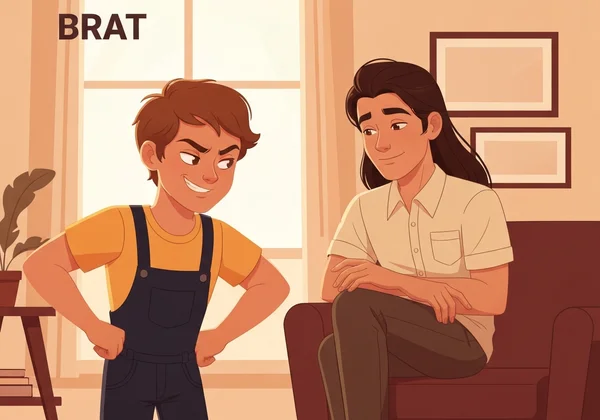
One of the most popular alternative dynamics is the Brat/Tamer relationship. It's a playful and often witty exchange of power that thrives on challenging authority. A "Brat" is a submissive individual who intentionally misbehaves or pushes boundaries to provoke a dominant partner, the "Tamer," into enforcing rules and providing "fun" punishments.
Understanding the Psychological Appeal of Brat Taming
The appeal of this dynamic is deeply psychological. For the Brat, it's about testing limits and seeking attention in a safe context. They get to be mischievous and assertive without genuinely disrespecting the dynamic's foundation. This playful rebellion can be incredibly liberating.
For the Tamer, it represents a challenge to maintain control with patience, creativity, and a firm but caring hand. They enjoy the mental chess match and the satisfaction of "taming" their spirited partner. This dynamic is not about genuine conflict but about a consensual game where both parties get what they need. The Brat gets attention and structured discipline, and the Tamer gets to exercise their authority in a responsive way.
Setting Boundaries in Brat Tamer Relationships
Because bratting involves pushing limits, clear and enthusiastic consent is absolutely crucial. Before engaging, both partners must have an in-depth conversation about hard and soft boundaries.
- Define the "Game": What kind of bratting is fun, and what is simply disrespectful? What types of "punishments" are on the table?
- Use Safe Words: A safe word is non-negotiable. It instantly stops the scene, reminding both partners that this is a consensual activity.
- Aftercare is Key: After an intense scene, both the Brat and the Tamer need aftercare. This involves emotional support, reassurance, and physical comfort to reaffirm the love and trust in the relationship.
Primal Play Dynamics
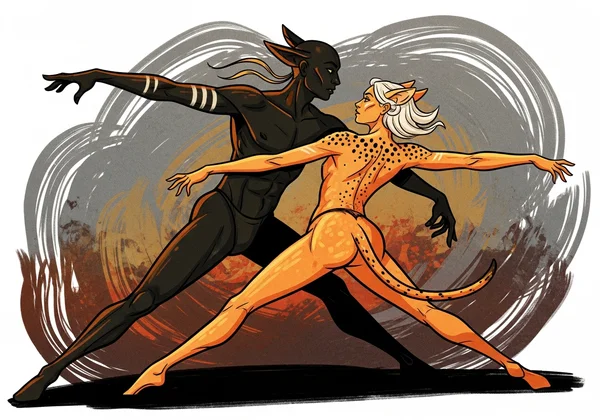
Primal play taps into our most basic, instinctual urges. This dynamic often involves roles like predator and prey, hunter and hunted, or simply two wild animals engaging in a raw, non-verbal power exchange. It's less about structured rules and more about channeling raw, instinctual energy.
Hunter, Prey, and the Psychology of Primal Play
The psychology of primal play is rooted in the thrill of the chase and the catharsis of surrender. The "prey" partner experiences a unique form of escapism. They let go of complex human thoughts to exist in a state of pure instinct and reaction. It can be a powerful way to release stress and anxiety.
The "hunter" partner taps into their own instincts of pursuit and capture. This isn't about causing genuine harm; it's about the intensity of the chase and the feeling of overwhelming power. For both, it's a deeply embodied experience that connects them to a part of themselves that modern life often suppresses. Unsure if this resonates with you? A comprehensive kink test can often reveal surprising inclinations toward such instinctual dynamics.
Creating Safe Primal Experiences
Safety in primal play is paramount because it can be physically and emotionally intense.
- Environment Check: Ensure the play space is free of hazards. Remove sharp objects or anything that could cause accidental injury.
- Negotiate Intensity: Discuss the level of intensity beforehand. Will there be biting, scratching, or chasing? What is and isn't allowed?
- Non-Verbal Cues: Because primal play is often non-verbal, agree on clear physical tap-out signals in addition to a verbal safe word. A simple and clear gesture can communicate "stop" when words fail.
Caregiver/Little Dynamics
The Caregiver/Little dynamic, often referred to as CGL (Caregiver/Little), is an emotionally intimate relationship focused on nurturing and dependency. In this dynamic, one person (the "Little") enters a childlike headspace ("littlespace"). The other person (the "Caregiver," sometimes called a "Daddy Dom" or "Mommy Dom") provides comfort, guidance, and care.

Ageplay vs. Little Space: Understanding the Distinctions
It's important to distinguish between "ageplay" and "littlespace." Ageplay is the broader category of roleplaying at an age different from your own. Littlespace, however, is a specific mental and emotional state. A person in littlespace feels innocent, carefree, and unburdened by adult responsibilities.
This dynamic is non-sexual for many participants, focusing instead on emotional intimacy and safety. For the Little, it's a retreat from the pressures of adult life. For the Caregiver, it's a deeply fulfilling role centered on providing protection, love, and structure for their partner.
Emotional Needs in Caregiver/Little Relationships
This dynamic meets profound emotional needs. The Little receives unconditional acceptance and a safe space to be vulnerable. The Caregiver finds purpose and satisfaction in nurturing and protecting someone they care for deeply. Trust is the absolute bedrock of a CGL relationship. The Little must trust the Caregiver completely to feel safe enough to enter littlespace. The Caregiver must be consistently reliable and attuned to the Little's emotional needs. If you feel drawn to nurturing or being nurtured, you can explore your preferences to see if this dynamic aligns with your inner self.
Other Alternative BDSM Roles
The world of BDSM is vast, and many other roles exist that cater to specific desires and psychologies. These dynamics show just how creative and personalized BDSM can be.
Pet Play Dynamics Beyond the Basics
Pet play is a form of roleplay where one person takes on the persona of an animal, and another acts as their owner, handler, or trainer. While kitten and puppy play are common, this dynamic can include any animal. It often involves a "headspace" similar to littlespace, where the "pet" can let go of human concerns. This role can be about loyalty, obedience, and playful interaction, fulfilling needs for both structure and freedom from complex social rules.
Pony Play, Sadomasochism, and Other Specialized Roles
Other specialized dynamics include pony play, where individuals emulate the behavior and appearance of a horse, often involving elaborate gear and training scenarios. Sadomasochism (S&M) is a core component of BDSM that focuses specifically on the consensual exchange of pain for pleasure. While often integrated into other dynamics, it can also be a primary focus for many. Understanding these roles helps illustrate that your identity is not limited to one label. Taking a BDSM roles test can help you see the unique blend of traits that make up your personal profile.
Embracing Your Unique BDSM Identity
Your journey through alternative BDSM roles reveals a diverse landscape of possibilities beyond traditional dynamics. From the playful rebellion of a Brat to the instinctual thrill of Primal Play and the deep intimacy of a Caregiver/Little relationship, there is a role and dynamic for nearly every desire.
Understanding these various roles helps you interpret your own feelings more deeply and embrace the full spectrum of your authentic self. Remember, there's no single 'right' way to practice BDSM—your journey is uniquely yours. Your identity is valid, no matter how it manifests.

Ready to explore how these alternative dynamics might show up in your personal preferences? Your path to self-knowledge begins with a single step. Take the free BDSMTest today to gain deeper insights into your unique profile and begin your journey of self-discovery.
Questions About Alternative BDSM Roles
What if my test results show multiple role inclinations?
This is very common and completely normal! Many people are "switches," meaning they enjoy both dominant and submissive roles. You might also find that different roles appeal to different parts of your personality. Think of your results not as a rigid label, but as a map of your interests. A good way to learn more is to start your test and see your full spectrum.
Are alternative BDSM roles considered "normal"?
Absolutely. In the BDSM community, "normal" is defined by what is safe, sane, and consensual for the people involved. These alternative roles are widely recognized and practiced. The most important thing is that the dynamic is healthy, consensual, and fulfilling for everyone participating.
How do I communicate my interest in alternative roles to a partner?
Open and honest communication is key. Start by creating a safe, non-judgmental space to talk. You can say something like, "I've been exploring some new ideas, and I'd love to share them with you." Using an objective tool can help; suggesting you both try our free tool can be a great way to open the conversation based on your shared results.
Can I identify with more than one BDSM role?
Yes, and most people do! Fluidity is a beautiful part of human sexuality and identity. You might feel like a Brat one day and a submissive pet the next. Your roles can also evolve over time as you grow and learn more about yourself. The goal isn't to find a single box to fit in, but to embrace all the facets of who you are.